Water softener installation in the Phoenix valley
Valley providers publish hardness from 8 grains per gallon in Gilbert to 25 in south Scottsdale. A properly sized softener is the only thing that stops that scale before it reaches your plumbing — and sizing it starts with knowing which end of that range you are on.
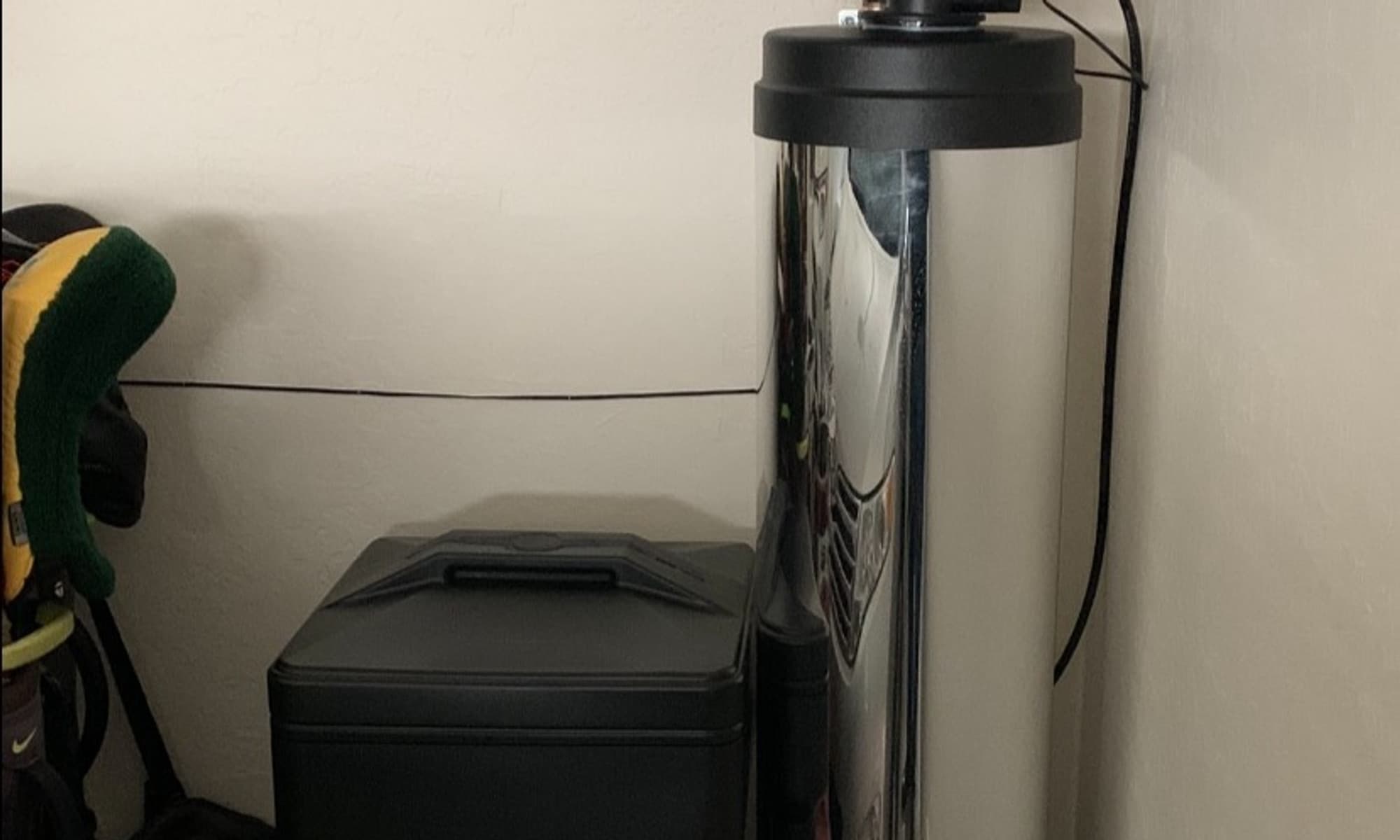
Valley water arrives hard because of where it comes from. Colorado River water delivered through the Central Arizona Project and local groundwater are both heavy in dissolved calcium and magnesium, and neither the city nor a filter pitcher removes them. A water softener does, by exchanging that calcium and magnesium for a trace of sodium or potassium before the water reaches a single fixture in the house.
What it does for you
Appliances last years longer
Scale is an insulator. A water heater coated in it burns more gas to reach the same temperature and fails early — softened water is the cheapest way to buy that heater more years.
No more spotted glass and crusted fixtures
The white film on shower doors, faucets and dishes is the hardness minerals left behind as water evaporates. Remove them upstream and the film stops forming.
Skin and hair stop feeling stripped
Hard water keeps soap from rinsing clean, which is what leaves skin tight and hair coarse after a Phoenix shower.
Less soap, less detergent
Soap has to overcome hardness before it lathers. Softened water cuts the detergent, shampoo and dish soap a household goes through.
How a softener actually works
Water passes through a tank of resin beads carrying a sodium or potassium ion. Calcium and magnesium hold a stronger charge, so they stick to the resin and release the lighter ion in trade. What comes out the other side is water with the scale-forming minerals removed.
The resin eventually fills up. On a schedule set by how much water the house actually uses, the system rinses itself with brine from the salt tank, flushes the hardness to the drain, and returns to service. A metered valve does that on demand rather than on a timer, so a household that travels is not regenerating for anyone.
Sizing is the part that goes wrong
A softener is sized on grains of hardness per day: people in the house multiplied by roughly 75 gallons each, multiplied by the hardness of your specific water. Get it wrong in either direction and you will pay for it.
If undersized, the system regenerates constantly, burns salt, and still lets hard water through at peak demand. If oversized, the resin sits saturated between cycles and is inefficient. This is the whole reason we read the analysis of your particular water source before quoting, instead of selling a standard unit to every address.
What installation involves
Most valley homes have a softener loop already roughed in — a pair of stubbed pipes in the garage, put there by the builder for exactly this reason. When a loop exists, installation is usually a couple of hours and a drain connection.
When there is no loop present, we tie into the main line after the pressure regulator and before the water heater, and run a drain line to an approved point that makes sense and meets building code. Homes built on HOA lots and in older Scottsdale and Tempe neighbourhoods sometimes push the equipment towards an exterior wall. We plan for an indoor location wherever one exists: valley heat is hard on resin and control valves, and an outdoor cabinet does not fix that.
Salt, salt-free, and which one you want
A traditional ion-exchange softener is the only technology that genuinely removes hardness. If you want the scale gone, the soap to lather and the spots to stop, that is the answer.
Salt-free conditioners do something different: they change the crystal structure so minerals are less able to bond to surfaces. They protect plumbing, sometimes without a drain line, brine or salt hauling, and they suit homes with sodium restrictions or no drain access. They will not give you the slick softened-water feel, and anyone claiming otherwise is not listening to their customer the way Aquaco does.
Common questions
How hard is Phoenix water, really?
It depends far more on where you live than most people expect. Published figures run from 8 to 10 grains per gallon in Gilbert up to 22 to 25 in south Scottsdale, with Phoenix itself spanning 9.2 to 20.1 across one city. Anything above 10.5 is classed as very hard. Several valley providers publish no figure at all, which is why we test your own tap and read it against whatever your area publishes.
How much does a water softener cost in Phoenix?
It depends on the size of the house and whether a softener loop is already plumbed in. We quote after testing your water and looking at the connection, not over the phone, and the in-home test and consultation are free.
Will softened water taste salty?
No. Ion exchange adds a very small amount of sodium in proportion to the hardness removed — far below what you would taste, and less than a slice of bread. On a sodium-restricted diet, potassium chloride or a salt-free conditioner avoids it entirely.
How much salt will I go through?
A typical valley household on a metered system uses somewhere around a bag a month. Hardness, water use and the size of the unit all move that number, which is another reason sizing matters.
Can I keep my existing softener and just have it serviced?
Often, yes — valves, resin and control heads are all serviceable. We will tell you honestly when a repair is worth it and when the unit is past the point of being worth more service.